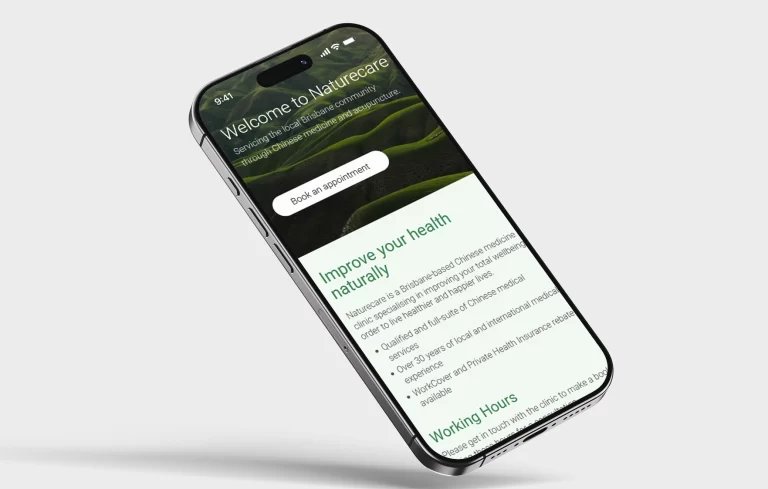
A patient is sitting in a running car outside the shops in Kenmore. They have a throbbing knee injury and want to lock in a physio session immediately. They open a clinic site on a mobile phone.
The page layout loads. The patient taps the booking button. Nothing happens.
They tap again. The screen freezes for three seconds while a massive third-party calendar widget tries to load in the background. Frustrated, the patient closes the browser, pulls up Google, and clicks the next clinic down the road.
What actually happened here?
Most web designers build medical sites on a desktop computer with a fast office internet connection. They embed a heavy booking portal – like HotDoc, Halaxy, or Cliniko – right into the middle of the page code. It looks fine on a big screen.
But on a mobile phone with a patchy three-bar connection, that embed acts like a concrete block tied to the engine.
Google measures how fast a site responds when a user taps the screen. If a heavy third-party calendar widget is clogging the code, the lag triggers a penalty. The search engine pushes the clinic down the rankings because the mobile experience is poor.
Clinics do not need to delete the booking system. The team just needs to change the digital infrastructure.
We audited an allied health clinic over in Mt Ommaney a few weeks ago. They were running a standard setup – a beautiful home page with a massive, interactive booking calendar embedded right below the main banner. They noticed new patient bookings were quietly slipping away.
We checked the mobile code. That single embed was forcing a phone to download three megabytes of heavy code before a user could even scroll down the page.
We ripped out the live embed. We replaced it with a fast, static button that only loads the booking portal when a patient actively clicks it. The page went from a sluggish six-second load time down to under two seconds.
The result? The front desk noticed a shift within a fortnight. Patients were actually completing the intake process on their phones because the friction was gone.
If a mobile site makes a patient wait, they will find a clinic that does not.